Key Questions
What water purity is required for pharmaceutical manufacturing?
USP Purified Water requires conductivity below 1.3 µS/cm at 25°C and TOC below 500 ppb; Water for Injection adds an endotoxin limit of 0.25 EU/mL. Navbharat Water systems reach conductivity below 0.1 µS/cm using double-pass RO with Electrodeionisation (EDI), with full validation documentation included.
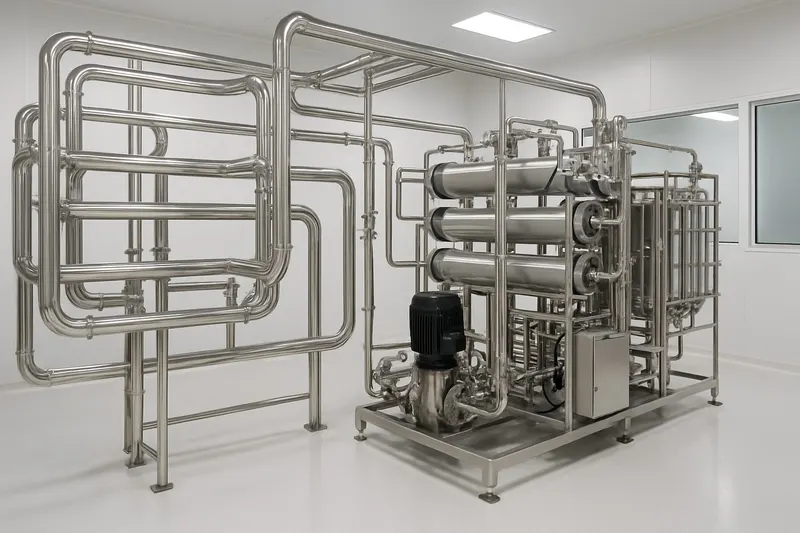
Municipal supply cannot reach these levels without advanced treatment. Beyond double-pass RO and EDI, a pharmaceutical system needs a storage and distribution loop in SS 316L with a slope of at least 1%, spray balls and vent filters, plus online TOC and conductivity monitoring with a 21 CFR Part 11 audit trail. Hospitals have further requirements: cooling towers carry Legionella risk that ASHRAE 188 addresses through active biocide management and regular monitoring, and Central Sterile Supply Departments need autoclave feed water certified to EN 285. At a 50 KLD USP purified water system in Hyderabad, double-pass RO and EDI deliver 0.06 µS/cm, and the system has run for three years with zero out-of-specification incidents. Existing industrial RO plants can often be upgraded to pharmaceutical grade by adding the distribution loop, an EDI module and online monitoring, after an assessment of the existing RO.
What validation documentation does a pharma water system need?
A pharmaceutical water system needs Design, Installation, Operational and Performance Qualification (DQ, IQ, OQ and PQ) documentation, with all instruments calibrated to NABL-traceable certificates. Navbharat Water provides the complete package, suitable for USFDA, WHO-GMP and EU-GMP audits, as part of every pharmaceutical water project.
USFDA and WHO-GMP audits demand more than qualification reports: they also expect ongoing deviation logs and calibration certificates for every monitoring instrument. The governing frameworks include USFDA 21 CFR Part 211 current good manufacturing practice and WHO TRS 1033 (Annex 3), while the water specifications themselves sit in USP <1231>, Water for Pharmaceutical Purposes, which covers purified water and water for injection. Navbharat Water builds the documentation into the project from the design stage, so the qualification trail matches the installed system. Online TOC and conductivity monitoring is configured with a 21 CFR Part 11 audit trail, and the Smart Water platform provides real-time data for QA teams and regulatory submissions. Navbharat Water validation teams have completed PW system validations for Cipla, Sun Pharma and several mid-size pharmaceutical manufacturers, and the Hyderabad PW system was validated to USFDA 21 CFR requirements with complete IQ, OQ and PQ documentation.
How long does it take to commission a pharmaceutical purified water system?
A typical 5–50 KLD USP purified water system takes 12–16 weeks from order to IQ completion. PQ validation, with 21 days of continuous monitoring as per USP, follows IQ and OQ, bringing the total time to validated operation to 5–6 months.
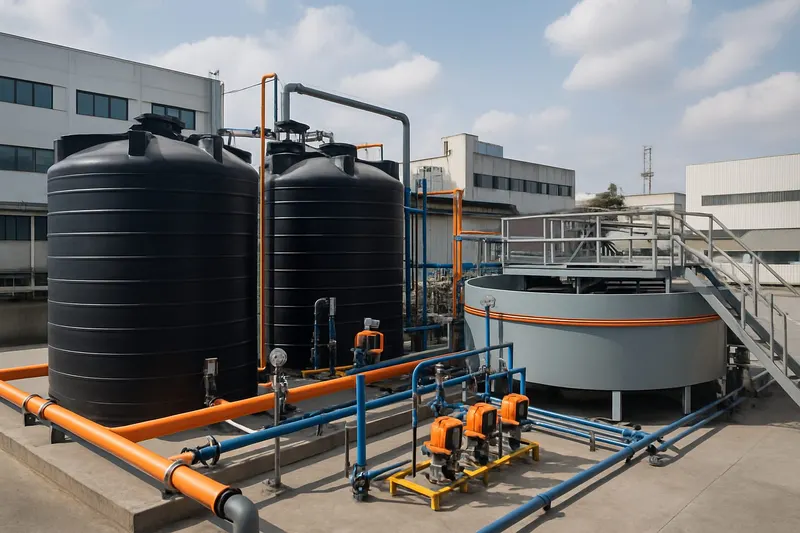
The schedule is driven by validation as much as fabrication. After design qualification, the system is fabricated, installed and checked against the approved design during installation qualification. Operational qualification follows, and performance qualification then demonstrates consistent specification water over the 21-day monitoring period. Planning the effluent side in parallel avoids a second bottleneck. Pharmaceutical effluent contains active pharmaceutical ingredients and solvents that standard ETP processes cannot handle, so Navbharat Water uses API-specific biological treatment with activated carbon polishing and sends sludge to authorised TSDFs with full chain-of-custody documentation. At a 250 KLD pharmaceutical ETP in Pune, COD has stayed at or below 200 mg/L, API removal above 99.5% has been verified by an NABL-accredited lab, and MPCB consent has been maintained with zero show-cause notices in two years. State PCB consent for pharmaceutical effluent sets the API limits the plant must meet.