
Effluent Treatment

Effluent Treatment Plant (ETP) Manufacturer in India

Industrial wastewater treated. Compliance guaranteed.

Technically reviewed by Prashant Dwivedi, Co-Founder & Director ·

Effluent Treatment
Effluent Treatment · Live Process

The Challenge

Why is industrial effluent your most complex CPCB compliance liability?

Manufacturing, processing, and chemical industries generate high-strength wastewater with BOD, COD, heavy metals, and suspended solids far beyond municipal standards. Without a correctly sized ETP, you face show-cause notices, production shutdowns, and criminal liability under the Water Act, 1974. Navbharat Water designs ETPs that handle your worst-case inlet load — not just your average.

74%

of CPCB show-cause notices issued to industries without functional ETPs (2024)

Key Questions

What is an effluent treatment plant (ETP)?

An effluent treatment plant (ETP) treats industrial wastewater until it meets discharge standards. Navbharat Water ETPs run from 5 KLD to 5 MLD and bring inlet BOD of up to 5,000 mg/L down to CPCB norms of BOD 30 mg/L or less and COD 250 mg/L or less.

Manufacturing, processing and chemical industries produce high-strength wastewater carrying BOD, COD, heavy metals and suspended solids far beyond municipal standards. An ETP removes these in three engineered stages. Primary treatment screens out gross solids, equalises flow and uses coagulation, flocculation and clarifiers to remove 60–80% of suspended solids and 30–40% of BOD. Secondary treatment uses extended aeration, SBR or MBBR biology to remove dissolved organics, with the process chosen by industry, since textile ETPs need different organisms than food-processing ETPs. Tertiary polishing with sand filtration, activated carbon or advanced oxidation brings the outlet to CPCB norms, with TSS at 100 mg/L or less. Treated water can then be reused in cooling towers or landscaping. Power consumption is 0.4–1.2 kWh/m³, and every system is process-designed for the worst-case inlet load rather than the average.

How do I size an ETP for my plant?

ETP sizing needs three inputs: average daily flow in KLD, a peak flow multiplier of typically 1.5–2 times the average, and inlet quality parameters such as BOD, COD, TSS, pH and heavy metals. Navbharat Water gathers this data through a free pre-design audit.

Industrial discharge fluctuates with shifts, batch processes and cleaning cycles, so equalisation tanks are sized to buffer flow and load variations before biological treatment. The biological stage then needs enough hydraulic retention time, 12–24 hours for an SBR, to reduce organics consistently. Inlet chemistry decides the rest of the train: high-strength distillery or pharmaceutical effluent with BOD up to 5,000 mg/L is handled through extended aeration or SBR stages, while textile effluent needs ozonation or Fenton advanced oxidation to reach the colour limit of 400 Hazen units. Sludge handling must be sized too. Filter press dewatering produces sludge at 20–30% dry solids, cutting disposal volume by over 70% compared with wet sludge handling. In a 250 KLD pharmaceutical ETP in Pune, outlet COD stayed at or below 200 mg/L against an MPCB consent limit of 250, and sludge volume fell 40% versus the previous system.

Which laws govern industrial effluent discharge in India?

Industrial effluent discharge is governed by the Water (Prevention and Control of Pollution) Act, 1974 and Schedule VI of the Environment (Protection) Rules, 1986. CPCB general standards set BOD at 30 mg/L or less and COD at 250 mg/L or less, and State PCBs often impose stricter consent conditions.

CPCB sets the national baseline, while State PCB consent conditions are industry-specific and frequently tighter, from MPCB in Maharashtra to GPCB in Gujarat and TNPCB in Tamil Nadu. Operating without a correctly sized, functional ETP exposes a plant to show-cause notices, production shutdowns and criminal liability under the Water Act. Navbharat Water designs every ETP to the tighter of the central and state limits, which leaves compliance headroom if norms change. Compliance is also a documentation exercise. Navbharat Water supplies the annual environmental statement and the test reports your EHS team needs, and Annual Maintenance Contracts cover daily checks, weekly instrument calibration, monthly diffuser cleaning and quarterly overhauls, with emergency response within 24 hours. Hazardous sludge containing heavy metals or pharmaceutical residues is sent to CPCB-authorised Treatment, Storage and Disposal Facilities, while non-hazardous sludge goes to authorised composting or landfill.
How It Works

What are the three stages of an industrial ETP?

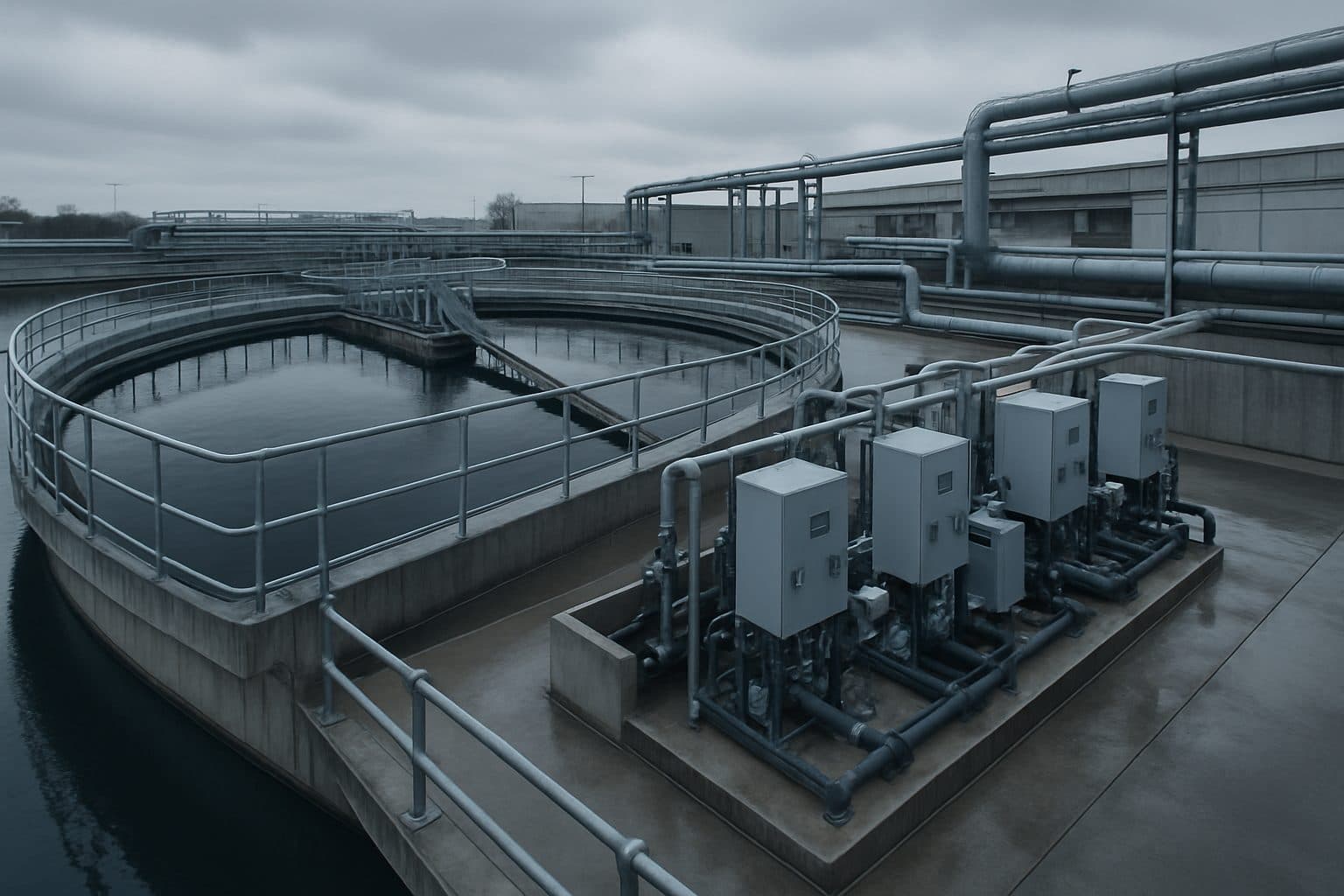
Our ETPs follow a primary-secondary-tertiary sequence, each stage engineered to your specific waste stream. No generic skids — every system is process-designed.

01/

Primary Treatment

Screening removes gross solids. Equalisation tanks buffer flow and load variations. Chemical coagulation-flocculation and primary clarifiers remove 60–80% of suspended solids and 30–40% of BOD before biological treatment.

02/

Secondary (Biological) Treatment

Extended aeration, SBR, or MBBR processes remove dissolved organics through microbial action. We select the biological process based on your industry — textile ETPs use different organisms than food-processing ETPs.

03/

Tertiary Polishing

Sand filtration, activated carbon, or advanced oxidation (AOP) brings the treated effluent to CPCB norms (BOD ≤30 mg/L, COD ≤250 mg/L). Treated water can be reused in cooling towers or landscaping, reducing freshwater costs.

Treatment Chain

How the treatment works

A primary–secondary–tertiary sequence, with sludge handled alongside and treated water sent to reuse.

  1. Step 01

    Screening & equalisation

    Screens remove gross solids; equalisation tanks buffer flow and load swings.

  2. Step 02

    Coagulation & clarification

    Coagulation, flocculation and primary clarifiers settle suspended solids and part of the BOD.

    60–80% SS removed

  3. Step 03

    Biological treatment

    Extended aeration, SBR or MBBR removes dissolved organics, chosen for your industry.

  4. Step 04

    Tertiary polishing

    Sand filtration, activated carbon or advanced oxidation brings the outlet to CPCB norms.

    BOD ≤30 mg/L

  5. Step 05

    Sludge dewatering

    A filter press or centrifuge dewaters sludge for authorised composting, landfill or TSDF.

    20–30% DS

  6. Step 06

    Reuse or ZLD

    Treated water goes to cooling towers or landscaping, or on to a zero liquid discharge train.

    COD ≤250 mg/L

Technical Specifications

What are the technical specifications for Effluent Treatment?

ParameterValue / Range
Capacity range5 KLD – 5 MLD
Inlet BODup to 5,000mg/L
Outlet BOD≤ 30mg/L
Outlet COD≤ 250mg/L
TSS outlet≤ 100mg/L
HRT (SBR)12 – 24hours
Sludge managementFilter press dewatering to 20–30% DS
Power consumption0.4 – 1.2kWh/m³

ETP capacity ranges from 5 KLD for small processing units to 5 MLD for large industrial estates. Inlet BOD up to 5,000 mg/L (common in distillery and pharmaceutical effluent) is handled through extended aeration or SBR biological stages. Filter press dewatering produces sludge at 20–30% dry solids, reducing disposal volume by over 70% versus wet sludge handling.

Case Study

What results has Effluent Treatment delivered on a live site?

Pharmaceutical ETP — 250 KLD, Pune, Maharashtra
Healthcare & Pharma250 KLD

Pharmaceutical ETP — 250 KLD, Pune, Maharashtra

Outlet COD consistently ≤200 mg/L against MPCB consent of 250. Sludge volume reduced 40% versus client's previous system. Annual chemical cost savings: ₹28 lakh through process optimisation. Full MPCB audit clearance in first year.

View all projects

Compliance Context

Which CPCB and State PCB standards apply to your industrial effluent discharge?

CPCB sets baseline standards under the Water Act, 1974, but State PCBs frequently apply stricter conditions. Navbharat Water's ETPs are designed to the tighter of the two, providing compliance headroom for regulatory changes. We also provide compliance documentation — the annual environmental statement and test reports your EHS team needs.

Water (Prevention & Control of Pollution) Act, 1974

Environment (Protection) Rules, 1986 — Schedule VI

CPCB General Standards for Discharge (BOD ≤30, COD ≤250 mg/L)

State PCB consent conditions (industry-specific)

MPCB / GPCB / TNPCB consent compliance frameworks

What could you save?

Calculate your NPV, IRR & payback period

ROI Calculator

Frequently Asked

Frequently asked questions about Effluent Treatment

Request a Technical Audit for Effluent Treatment.

Tell us your capacity, inlet profile, and compliance targets. We'll size a system that fits.

Start Your Audit