
STP odour is fixed permanently by removing the conditions that create it, not by masking the smell. Almost every persistent smell comes from part of the plant going septic: too little dissolved oxygen, too much sludge, grease reaching the biology, or a plant that is overloaded or poorly ventilated. Restore aeration, desludge on a schedule, keep grease out and contain the air from odour sources, and the smell stops.
What causes STP odour?
Most STP odour is hydrogen sulphide, the rotten-egg smell, along with other sulphur compounds and ammonia. They form when sewage or sludge runs out of oxygen and anaerobic bacteria take over. Low aeration, sludge build-up, grease, overloading, stagnant dead zones and septic collection sumps are the usual triggers, often more than one at once.
A healthy aerobic plant smells earthy close to the tanks and little beyond them. The main causes of odour are:
- Septic conditions from low dissolved oxygen, usually caused by undersized blowers, blower breakdowns, clogged diffusers or blowers run on timers.
- Sludge build-up from infrequent desludging, which leaves old sludge to decompose anaerobically in the tanks.
- Grease and oil from kitchens without working grease traps, which coats biomass and diffusers and forms floating scum.
- Undersized or overloaded plants, where occupancy or water use has grown beyond the original design.
- Poor ventilation and uncovered tanks, which let odorous air escape into occupied spaces.
- Hydrogen sulphide released from collection sumps and wet wells where sewage sits too long before reaching the plant.
- Dead zones in tanks where mixing is poor and solids settle and turn septic.
Why does low dissolved oxygen make an STP smell?
Aerobic bacteria need dissolved oxygen to break down sewage without producing odour. When oxygen runs short, anaerobic bacteria take over and convert sulphate in the sewage to hydrogen sulphide. Low dissolved oxygen is one of the most common causes of STP odour, and it is usually caused by blowers that are undersized, broken or switched off.
Blower downtime is the usual culprit. A blower that trips, a standby blower that was never repaired, or diffusers clogged with scale and grease all cut the air reaching the biology. Timers are another common cause: blowers switched off at night to save power let the aeration tank go septic, and the smell returns every morning when flow rises.
How do sludge build-up and grease cause odour?
Sludge left too long in the aeration tank, settling tank or sludge holding tank decomposes without oxygen and releases hydrogen sulphide. Grease from kitchens coats bacteria and diffusers, reduces oxygen transfer and forms floating scum that turns septic. Together they are a frequent cause of persistent odour.
Desludging is often done only when the sludge becomes visible or a complaint arrives. By then, a layer of old sludge has been decomposing for weeks. A written desludging schedule based on sludge levels and MLSS, the concentration of biological solids in the aeration tank, prevents this.
Grease is a design and discipline problem. Hotels, hospitals and food courts with large kitchens need correctly sized grease traps that are cleaned regularly. A missing or neglected grease trap sends fat straight to the STP, where no amount of aeration will fully compensate.
Can an undersized or overloaded plant cause odour?
Yes. A plant designed for fewer occupants or less water use than it now receives cannot supply enough oxygen or retention time for the extra load, so parts of it go septic. Overloading is common where buildings have added floors, rooms or tenants, or where the original design underestimated peak flows.
Signs include odour that worsens at peak occupancy, foaming, cloudy treated water and lab results drifting towards the outlet limits. The fix starts with a capacity check against current flow and load.
Ventilation matters too. Uncovered tanks, plant rooms without exhaust and untreated sump vents let odorous air escape even when the process is healthy.
How do you diagnose the source of STP odour?
Start with data, not guesses. Check dissolved oxygen in the aeration tank, blower run-hour logs, sludge levels and MLSS, recent lab reports, grease trap cleaning records and where the smell is strongest. The pattern of when and where it smells usually points to the cause within a single site visit.
- Dissolved oxygen: take readings in the aeration tank at different times of day, including early morning. Near-zero readings point to aeration problems.
- Blower logs: compare run hours with the design schedule, and check whether the standby blower works and whether timers are cutting aeration.
- Sludge age and MLSS: check whether solids are accumulating beyond the operating range and when the plant was last desludged.
- Lab reports: look for rising BOD, COD or suspended solids in treated water, which suggest the process is under strain.
- Grease traps: check cleaning records and look for scum on the equalisation and aeration tanks.
- Location: note whether the smell is strongest at the inlet sump, the aeration tank, the sludge tank or the plant room exhaust.
What are the quick fixes, and why do they not last?
Quick fixes include running blowers continuously, emergency desludging, cleaning grease traps, clearing clogged diffusers and covering open tanks. They often cut the smell within days. They do not last if the plant is undersized, the desludging schedule is not written down, or the blowers cannot supply enough air at peak load.
Fragrance sprays and masking chemicals are the weakest quick fixes: they leave the septic conditions in place, and the smell returns when dosing stops.
What are the permanent fixes for STP odour?
Permanent fixes match the cause: adequate aeration capacity with a working standby blower, a written desludging schedule, correctly sized and maintained grease traps, covered tanks with ventilation, odour control units on sumps and sludge tanks, and a process upgrade, such as MBR where space allows, when the plant is overloaded.
| Symptom | Likely cause | Lasting fix |
|---|---|---|
| Rotten-egg smell from the aeration tank, worse in the morning | Low dissolved oxygen; blowers on timers or undersized | Continuous aeration sized to peak load, repaired standby blower, cleaned diffusers |
| Smell strongest at the sludge tank | Infrequent desludging; old sludge turning septic | Written desludging schedule based on sludge levels and MLSS |
| Floating grey scum and greasy smell | Kitchen grease reaching the plant | Correctly sized grease traps with a cleaning schedule |
| Odour rises with occupancy, cloudy treated water | Plant overloaded beyond its design capacity | Capacity check, added aeration or a process upgrade such as MBR |
| Smell in corridors or parking near the plant room | Uncovered tanks or poor plant room ventilation | Sealed tank covers, exhaust ventilation and an odour control unit |
| Strong smell at the inlet sump | Hydrogen sulphide from sewage held too long in the sump | Reduced retention in the sump, covers and odour treatment on the sump vent |
| Patchy smell and black solids in tank corners | Dead zones with poor mixing | Diffuser layout or mixing correction |
An odour control unit treats the air drawn from sumps, sludge tanks and plant rooms before it is released, typically with activated carbon, a biofilter or a chemical scrubber. It works best alongside process fixes, not instead of them.
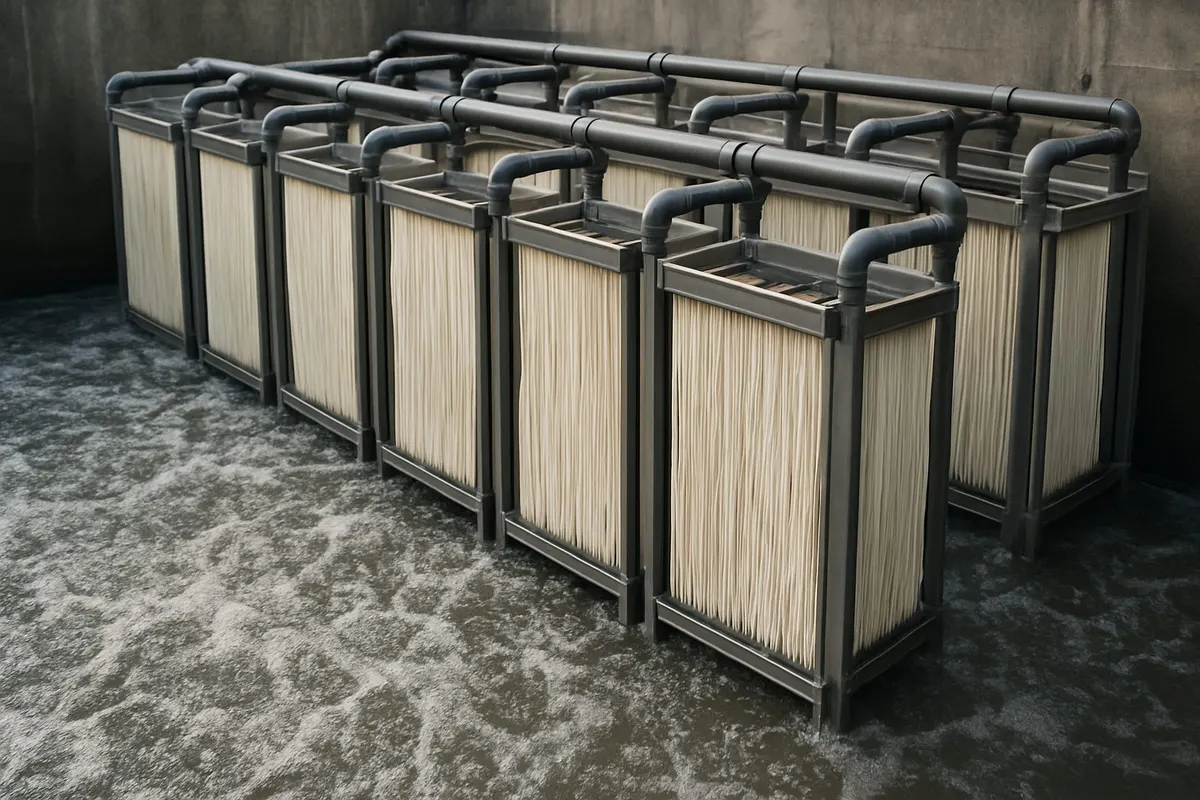
Upgrading to MBR suits plants that are overloaded and short of space, because membranes let the same tanks treat more sewage. It is a larger decision and should follow an audit.
When should you get a professional STP audit?
Get an audit when odour returns after quick fixes, when lab results drift towards the outlet limits, when occupancy or water use has grown, or before an SPCB inspection. An audit checks capacity against current load, aeration, sludge handling and ventilation, and gives a costed list of fixes.
Odour and compliance are linked. Sewage treatment plants must meet the discharge standards notified in 2017, which cap outlet BOD at 30 mg/L, or 20 mg/L in metro cities and state capitals, and the NGT and State Pollution Control Boards may impose stricter limits. A plant that smells is often a plant close to missing them.
Navbharat Water runs AMC and O&M contracts for sewage treatment plants, covering daily operation, blower and diffuser maintenance, desludging coordination, lab testing and odour troubleshooting. For new plants and upgrades, including MBR retrofits, see the sewage treatment solutions page. The AMC and operation and maintenance service is at /solutions/amc-operation-maintenance.
Frequently asked questions
Is STP odour a sign that the plant is failing?
Usually it is a sign that part of the process has gone anaerobic, most often from low dissolved oxygen, excess sludge or grease. The plant may still be meeting its outlet limits, but persistent odour is an early warning that treatment is under strain and should be investigated before lab results start to slip.
Can chemicals or fragrance sprays fix STP odour?
They can mask it for a few hours or days, but they do not remove the cause. Sprays and dosing chemicals treat the smell, not the septic conditions that produce hydrogen sulphide. Lasting fixes restore aeration, remove accumulated sludge and grease, and contain and treat the air from odour sources.
How often should an STP be desludged?
There is no single interval. It depends on plant size, technology, load and how the sludge is handled. The right frequency is set by monitoring sludge levels and MLSS in the aeration tank, and it should be written into the operating schedule rather than done only when a problem appears.
Why does the STP smell worse at night or early morning?
Flow and load swing through the day. If blowers run on timers or are switched off at night to save power, the aeration tank loses oxygen and turns septic, and the smell appears when flow picks up in the morning. Continuous aeration matched to the load usually solves this pattern.
Should an existing STP be upgraded to MBR to stop odour?
Not automatically. Most odour problems are fixed by restoring aeration, desludging and containing odour sources. An MBR upgrade makes sense where the plant is also overloaded, space is limited and better treated water is needed for reuse. A site audit should decide, based on tank condition and load.
Sources
Ready to discuss your ZLD requirement?
Navbharat Water engineers have commissioned ZLD plants from 10 KLD to 10 MLD across India. Tell us your inlet profile and compliance target.
Request a Technical Audit